
When Jon Moxley decided he was playing a real-life version of the opening few missions of Manhunt at All Out 2024, a new power was born within AEW. ‘Dictator’ Jon, as some would like to call him- and well let’s be honest, even the harshest dictators need a team beneath them capable of carrying out the heinous crimes which populate their master’s mind. Enter The Death Riders.
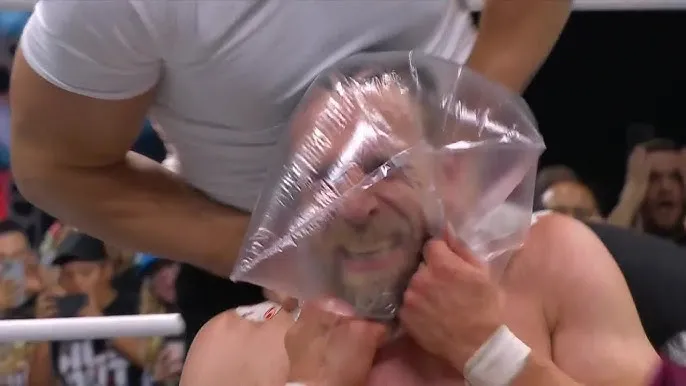
Now that almost a year has passed and the dust is starting to settle on Jon Moxley’s fourth AEW World Championship reign, a rule which came to a poetic, yet bloody quietus at the hands of AEW’s ‘main character’ Hangman Adam Page at All in 2025 , (deservedly so, I must add, irrespective of the fact that I think Moxley may have genuinely choked him out in the match), a little inspection is in order.
Pour moi, I think it is necessary to scrutinize why one of AEW’s most polarising storylines was actually written for, whilst also analysing some of the lasting impressions of Le Cavaliers de la Mort‘s near-year long reign of havoc as we approach 2026.
In order to do so, questions will be proposed, such as: was Hangman always destined to be AEW’s chevalier? Or was the 2025 Owen Hart Foundation Tournament perfectly utilised as a creative pivot to distract from the original protagonist’s quest to climb Mount Everest? I guess us fans will never truly know. Either way, on a personal note, all I can say is the ends certainly justified the means.
So buckle up, and enter the ride as we take a deepish dive into The Death Riders, reflecting upon this ensemble’s tyrannical rule as it is apparent that the now dethroned Kingpin Moxley is here to carry out his vision for the long-term, with or without the AEW World Championship.
Part One will cover the members, their message, and initial reception, while Part Two will analyse the importance of the Owen Hart Foundation Tournament, and more of the contemporary effects of Moxley’s reign.
The Crew
Formed from the remnants of a once powerful Blackpool Combat Club, Jon Moxley’s new hand-picked battalion was formulated with intimidation as its crux. Moxley, assuming the role of Don Corleone, surrounded himself with an intriguing accumulation of capos.
Claudio Castagnoli- this new iteration’s underboss. A man sculpted from the Gods themselves. An impeccable and prodigious pro-wrestler, who despite his lean, yet natural looking muscular physique, possesses the impressive ability to throw about any man as if they were a child. A formidable accompaniment.
(Who in hindsight could/should eventually turn on Moxley, in what could be a tantalising extension of the story. Finally unleashing The Swiss Superman’s own individual reign of terror upon AEW.)
Pac, an anything but a benign bastard who, again chiselled to the bone, possesses the innate ability to put on a match with anyone from around the world that would leave Meltzer’s knickers needing a good deep seep.

I also have some personal bias here as, like Pac, I also grew up in the Toon (Newcastle-upon Tyne, England, for all my international readers), but just keep that man healthy and you will reap the rewards as a promotor and a fan.
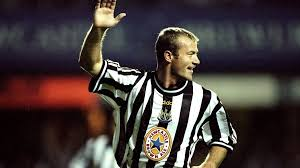
Wheeler Yuta, a talented AEW ‘original’ of sorts who, following his eventual inclusion in the Danielson betrayal, now had no place to call home and an itch to scratch. Young, impressionable, and happy to oblige, Yuta was the perfect archetypal ‘young’ wrestler to embryonically mould in the faction’s image. Perfect cannon fodder for some, but a Ring of Honor Pure Champion and a former AEW Trios Champion for me.

And then there is Marina: ‘The Problem’, both figuratively and literally. Far from anyone’s wing woman, Marina, who Mox himself stated, was “forged in the fires of combat”, added a myriad of intriguing elements to the group. While Castagnoli was undeniably Moxley’s underboss on paper, it was Shafir who assumed that role with visible consistency.
Armed with the odious task of guarding the AEW World Championship as it remained enclosed in a briefcase for near part of a calendar year- one of the storyline’s most divisive tropes- the Judo blackbelt offered The Death Riders an ideal sprinkle of real life intimidation. This enabled the group to plausibly implement their modus operandi.
Something that, upon reflection, The Elite’s earlier failed takeover angle perhaps lacked? That’s not to discredit The Elite in any way, this is pro-wrestling after all, not MMA. However, when operating a hostile managerial takeover of a wrestling company, it doesn’t harm the optics to be accompanied by genuine combat connoisseurs. (More on this later.)
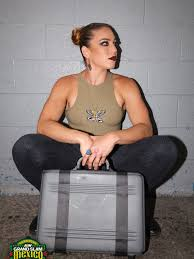
In addition, Shafir’s presence proposed more thought-provoking elements. For example, her formidable guise assisted in not only inverting some preconceived notions of gender roles and their potential capabilities within the mainstream wrestling landscape, but she also subverted some of the explicit connotations of hegemonic masculinity depicted by the other four male members.
In other words, Shafir skewed the understanding of how female wrestlers should, or could be implemented on screen, epitomised as she conjured up some tense and unforgettable moments with the likes of Swerve Strickland during Anarchy in the Arena, and culminating in a somewhat cathartic ‘buckshot lariat’ at the hands of Hangman Adam Page.
While this concept has been explored in the past throughout numerous promotions, for me this was a refreshing take on the notion of gender stereotypes in wrestling as a whole, and certainly caught the attention of the wrestling community.
The Mission Statement
“My goals going forward are probably the most ambitious things I’ve ever attempted […] And you know, logically on paper, one would say they would probably be impossible, but we’re going to do it. We’re going to accomplish those things.” (Jon Moxley, NY Post, 11/11/24)
The Death Riders Raison D’être
So, what really was The Death Rider’s intention all along- their reason to be? The January 29th, 2025 edition of Renee Paquette’s ‘Close-Up with The Death Riders‘ helped explain some of these questions.
Moxley himself, whilst labelling a few prerequisites for membership, including “discipline, integrity, professionalism, [and] trust”, also reinforced one of the crew’s recurring motifs: their disdain for how AEW had progressed. For The Death Riders, this was supposed to be a company “for wrestlers, by wrestlers.”
Continued…
In Paquette’s fascinating interview, Castagnoli continued, noting that for him “there are people in the ring who should not be in the ring,” which added another absorbing element to this group’s reason for existing. It was clear this assortment viewed themselves as a cut above, and who was going to show them otherwise? In fairness, when your group is spear headed by AEW’s now only four-time World Champion (three-time at the time), any backlash would be hard to endure.
For Pac, The Death Riders “are not brothers, [they] are not family, [they] are professionals who give a shit […] pro-wrestling gorillas who want to usher in the end.” The end of what? The end of who? Who were these wrestlers, and to be frank, could you really divulge explicit individuals on live TV without totally burying talent signed to your roster? Or, did The Death Riders quite simply not give a fuck? In order to achieve their aims, a more nuanced approach would surely have to be taken.
In all honesty, perhaps this was one of the major criticisms of The Death Rider’s storyline. When given the opportunity to verbally divulge their reasoning on TV or via promos, they sometimes lacked clarity, conviction and/or expansion, more often than not pirouetting back to their theoretical genesis without any pay off or intriguing development.
There is only so long you can linguistically suspend an audience’s belief with continued mystery before the viewer either demands deeper clarity, or simply just loses interest all together.
In other words, there had to be a reason for this ‘unscripted violence’. AEW may have been promoted from the outset as a sports-based wrestling company, but whether they put on the most physical or athletically demanding in-ring matches, wrestling is still entertainment. It is hard to remain entertained when a narrative becomes stagnant.
However, in their defence, if Moxley had been granted such a hefty temporal spot on AEW’s yearly calendar, then maintaining stutter-free momentum for that long would be quite the achievement.
A task which, lets be honest, no matter how amazing of a fantasy booker you may think you are, is fairly impossible to comprehend in a business which delicately balances immensely physical performances alongside weekly episodic television. Not to mention the obvious risks of derailing injuries or contractual disputes, or wrestler’s outside interests! The pesky old wrestling business, eh?
Upon reflection, it is hard to believe that, at one point during the storyline, based on this rather arbitrary picture of Tony Khan meeting with Shane McMahon in Arlington, Texas in 2024, some fans actually pondered if Shane McMahon was some form of ‘higher power’ guiding The Death Riders. However fascinating this plot could have been (if executed at all), the opening of a corporate ‘forbidden door’ was probably the most tantalising result of said speculation.

If anything, this conjecture could have actually been an indication of the stagnating nature of The Death Riders somewhere around the narrative’s midpoint. Why would such a dominant faction need a ‘higher power’? Would that not insinuate weakness on their behalf?
For me, the plot’s opening stanza was actually incredibly intriguing. Like many others, I was genuinely intrigued to know what the content of this “conversation” with Darby Allin would be. Somewhere around the middle of the storyline, however, something changed. Interestingly, this also parallels the time when Darby left for Mt. Everest.
What followed was a convoluted and meandering middle, but props must be given for the way they creatively rectified such static. From a personal standpoint, the involvement of The Young Bucks served as the catalyst for this storyline’s renaissance. Not only did The Young Bucks’ presence as EVPs tie into The Death Rider’s call for control, but it also astutely allowed the storyline to explore the concept of cross-promotional influence. By utilising both Moxley and The Young Buck’s association with NJPW, The Death Rider’s were able to combat the sheer growing babyface presence. Enter Gabe Kidd.
Kidd’s brief interjection, alongside the involvement of The Young Bucks, showed fans that you never quite knew who could show up as the battle intensified. That’s the power of selling tickets right there! Moreover, Kidd’s sheer physicality was the perfect counterweight for the likes of Samoa Joe and Powerhouse Hobbs.
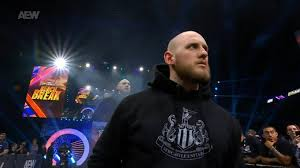
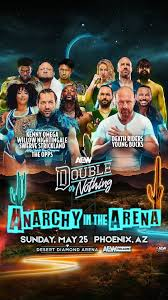
For me, one of the most impressive achievements of this storyline was The Young Bucks‘ new presentation. Following a brief hiatus, AEW’s ‘Founding Fathers’ reminded everyone exactly why a billionaire would trust them to start a promotion in the first place. They really are poetry in motion between the ropes. Matthew and Nicholas not only helped Moxley by realigning the attention of two of his primary targets- Will Ospreay and Swerve Strickland- but they also re-inserted themselves as key in-ring wrestlers, mixing their hands with talents both new and old with impeccable ease.
Even now, the post-EVP Bucks are providing fans with some of the wittiest and most entertaining content I have seen from them in years. Praise be to The Death Riders?


Great read, highly interesting and informative and left me looking forward to part 2